Acupressure for Stress & Pain Relief: A Beginner’s Guide
By Mitesh Thakkar · Founder & Lead Therapist, MBS Holistic Clinic, Whitefield, Bangalore · Reviewed by the MBS clinical team
Key Takeaways
- Acupressure is a needle-free therapy that applies firm, gentle pressure to points on the body to relieve pain, tension and stress.
- It shares acupuncture’s meridian map but uses fingers and hands instead of needles.
- Common uses include headaches, neck and back tension, anxiety, nausea and poor sleep.
- A few points (LI-4, PC-6, Yintang) are safe to try at home; a trained practitioner can target concerns more precisely.
Most of us carry tension somewhere — a stiff neck, a tight jaw, a headache that arrives with every deadline. Acupressure is a simple, needle-free way to work with that tension using nothing more than your own hands. This beginner’s guide explains what acupressure is, how it works, its benefits, and a few points you can try safely at home.
What Is Acupressure?
Acupressure is a traditional healing technique that applies firm, gentle pressure to specific points on the body. It shares its map with acupuncture — the same network of energy channels, or meridians — but uses fingers, thumbs and palms instead of needles. That makes it completely needle-free and easy to learn the basics of. It has been practised across Asia for thousands of years and remains popular precisely because it needs no equipment.
How Does Acupressure Work?
In traditional terms, acupressure releases blockages along the meridians so energy, or qi, can flow freely again. In modern terms, pressing these points may stimulate the nervous system, ease muscle tension and prompt the release of the body’s own feel-good chemicals such as endorphins. Either way, the result people notice is the same: less pain and more calm.
Benefits of Acupressure
Acupressure is commonly used for headaches and migraines, neck and back tension, stress and anxiety, nausea, menstrual discomfort and poor sleep. Because it is gentle and drug-free, it is a popular first step for everyday aches and stress before reaching for medication — and it can be used almost anywhere, from your desk to your bed.
3 Acupressure Points You Can Try at Home
A few well-known points are safe for most people to try gently. Press each for 30 to 60 seconds with steady, comfortable pressure while breathing slowly.
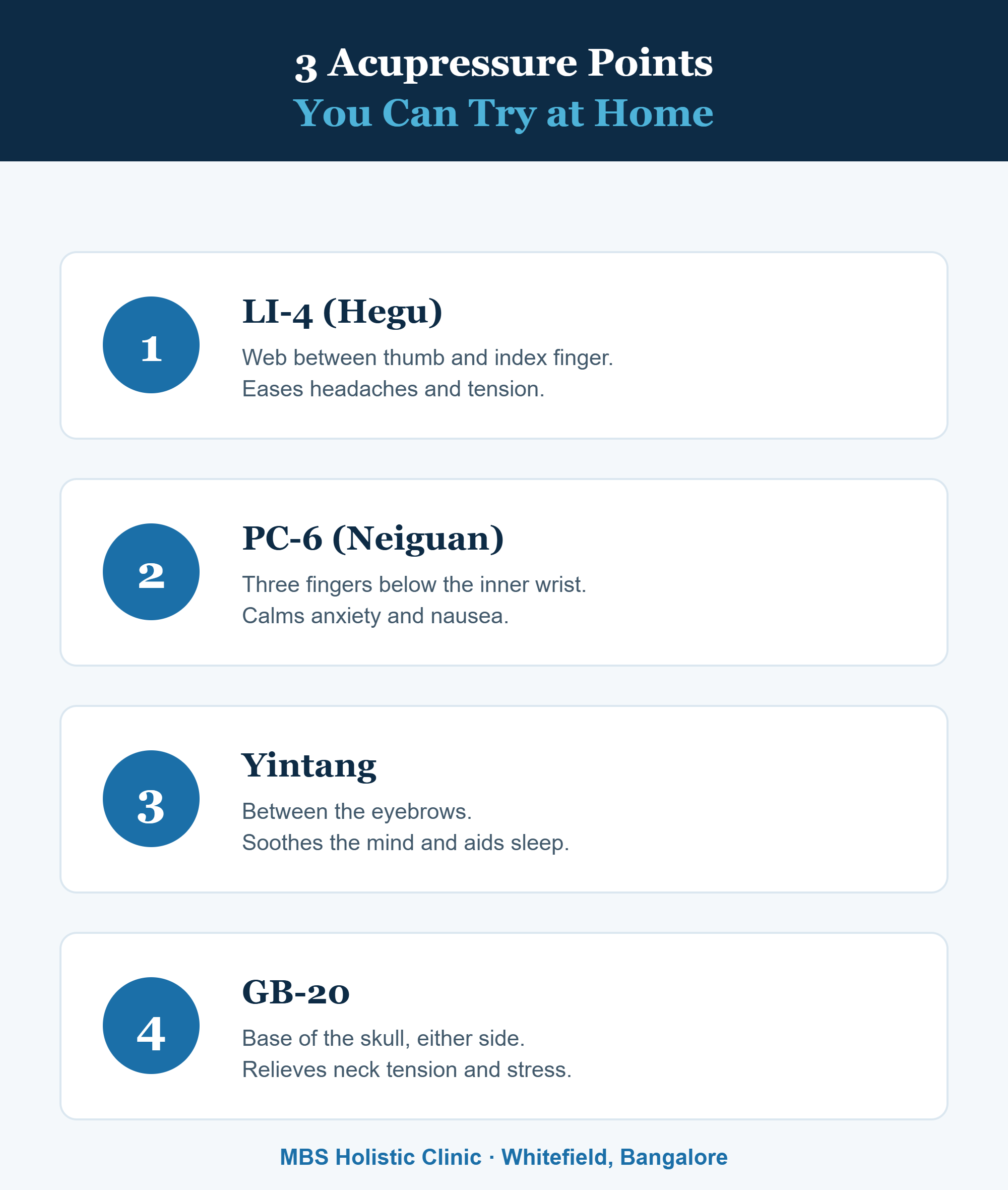
LI-4 (Hegu) sits in the web between your thumb and index finger and is a classic point for headaches and general tension. PC-6 (Neiguan) is about three finger-widths below the inner wrist crease and is widely used for anxiety and nausea. Yintang, between the eyebrows, is calming and can help with sleep. If a point feels painful rather than firm, ease off — these are for everyday tension, not a substitute for professional care.
Acupressure vs Acupuncture
The two share the same points and philosophy. The key difference is simple: acupuncture uses fine needles inserted by a trained practitioner, while acupressure uses hands-on pressure and can be done without needles. If you dislike needles, acupressure is the natural place to start — and you can practise it yourself between any professional sessions.
A Few Safety Notes
Acupressure is very safe, but a little care helps. Avoid pressing directly on injuries, wounds, bruises or varicose veins. If you are pregnant or managing a health condition, check with a professional first, as some points are best avoided in pregnancy. And remember that acupressure supports your wellbeing — it does not replace medical diagnosis or treatment for persistent or serious symptoms.
When to See a Professional
Self-care points are great for everyday tension, but a trained practitioner can assess your whole pattern and target your specific concern far more precisely. If you would like guided treatment, explore acupressure therapy in Bangalore at MBS Holistic Clinic, or combine it with counselling when ongoing stress is the root cause of your tension.
Acupressure for Stress & Pain: Frequently Asked Questions
What is acupressure good for?
Acupressure is commonly used for headaches and migraines, neck and back tension, stress and anxiety, nausea and poor sleep.
How is acupressure different from acupuncture?
Both use the same points and philosophy, but acupuncture uses fine needles while acupressure uses hands-on finger pressure, making it completely needle-free.
Can I do acupressure at home?
Yes. Points like LI-4 (hand), PC-6 (inner wrist) and Yintang (between the eyebrows) are safe for most people to press gently for 30 to 60 seconds. Ease off if a point feels painful.
Is acupressure safe during pregnancy?
Some points are best avoided in pregnancy. If you are pregnant or managing a health condition, check with a trained practitioner before using acupressure.
Where can I get acupressure therapy in Bangalore?
MBS Holistic Clinic offers acupressure therapy in Whitefield, Bangalore, serving Belathur, Kadugodi, Hoodi and nearby areas.
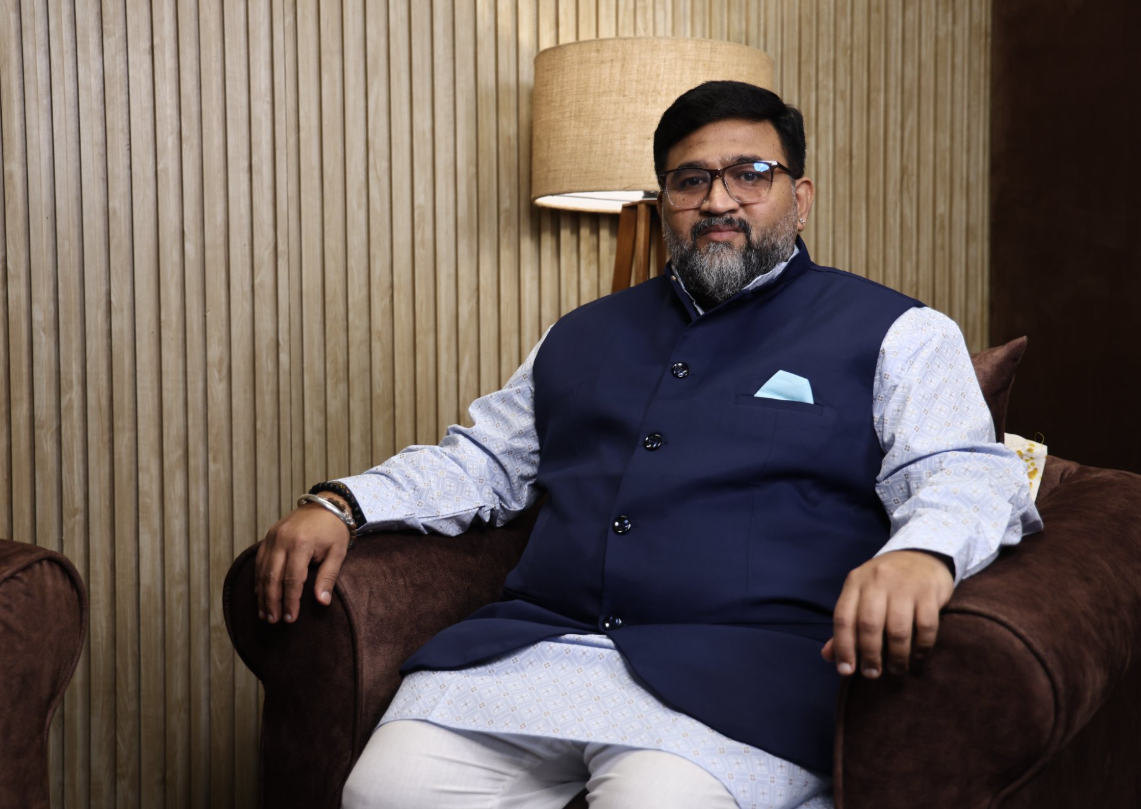
Mr. Mitesh Thakkar is a Counselling Psychologist, Hypnotherapist, and Holistic Mental Health Practitioner with over 20 years of experience supporting individuals with depression, anxiety, stress, and emotional wellbeing. He has guided more than 12,000 clients through evidence-based counselling combined with integrative therapeutic approaches at MBS Holistic Clinic, Bangalore.