How to Evaluate Compatibility Before Marriage
Marriage is one of the most important life decisions, yet many people focus mainly on attraction, excitement, or family approval while overlooking long-term compatibility.
Key Takeaways
- Compatibility before marriage is about shared values, communication styles, life goals and how you handle conflict — not just attraction.
- Key areas to evaluate: finances, family expectations, intimacy and long-term goals.
- Honest conversations, and sometimes pre-marital counselling, reveal compatibility better than assumptions.
- MBS Holistic Clinic offers pre-marital and couples counselling in Kudasan, Gandhinagar.
While love and emotional connection are important, successful marriages also require communication, emotional maturity, shared values, trust, and mutual understanding.
Compatibility does not mean two individuals must think exactly alike. Instead, it means they can understand, support, and grow with each other despite differences.
Before making a lifelong commitment, it is important to evaluate whether the relationship has a healthy emotional foundation for long-term partnership.
What Does Compatibility Really Mean?
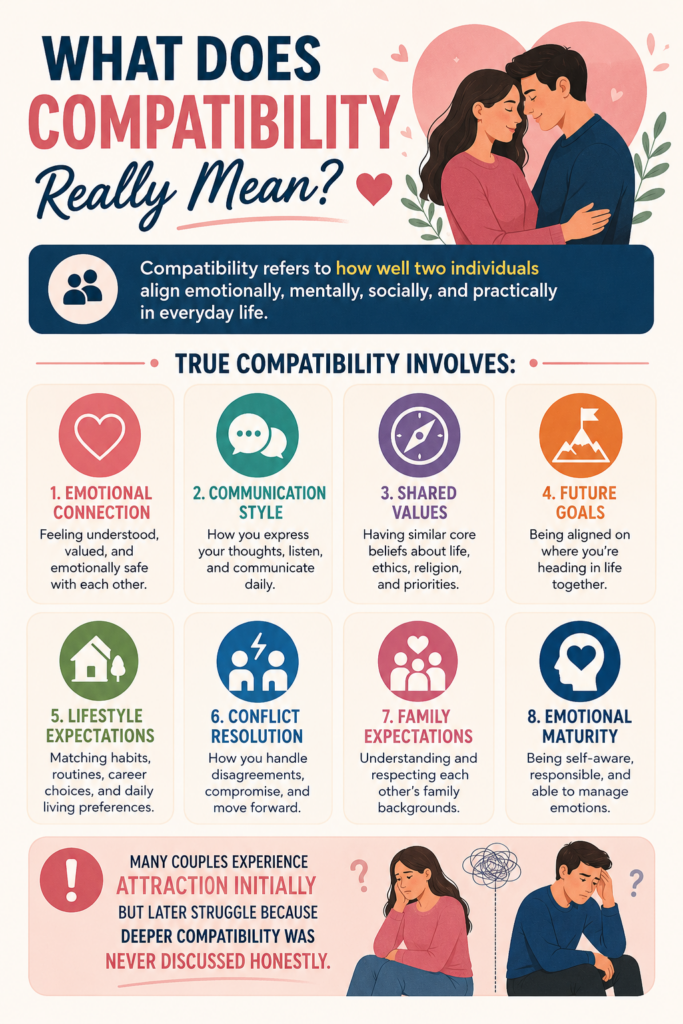
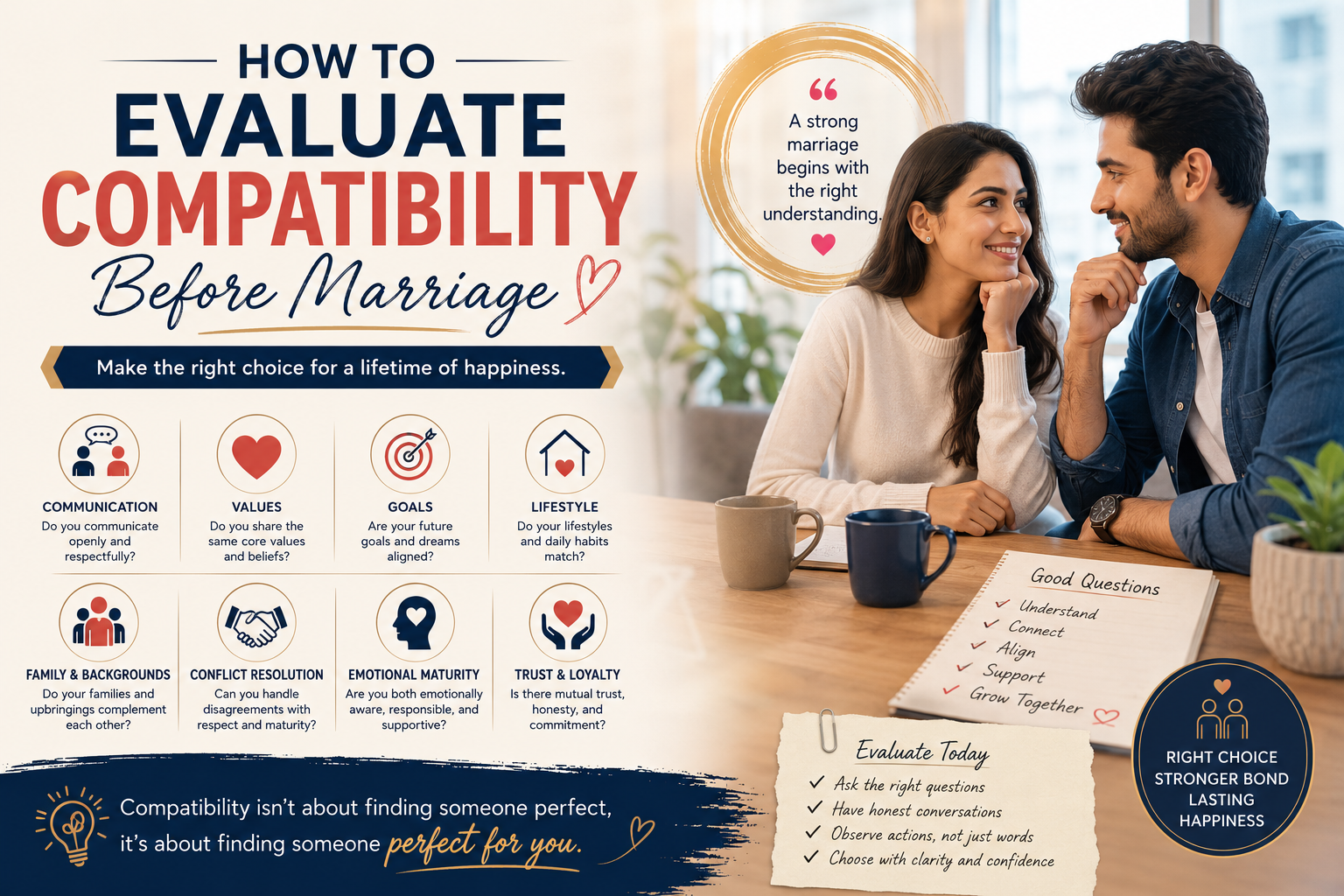
Compatibility refers to how well two individuals align emotionally, mentally, socially, and practically in everyday life.
True compatibility involves:
- Emotional connection
- Communication style
- Shared values
- Future goals
- Lifestyle expectations
- Conflict resolution
- Family expectations
- Emotional maturity
Many couples experience attraction initially but later struggle because deeper compatibility was never discussed honestly.
1. Evaluate Communication Style
Healthy communication is one of the biggest indicators of relationship compatibility.
Ask yourself:
- Can we discuss problems openly?
- Do we feel emotionally heard?
- Are disagreements handled respectfully?
- Can we express emotions honestly?
Strong communication creates emotional safety and reduces misunderstandings after marriage.
Poor communication often leads to emotional distance, resentment, and repeated conflict.
At MBS Holistic Clinic, relationship and marriage counseling focuses heavily on improving emotional communication and understanding between partners.
2. Understand Emotional Compatibility
Emotional compatibility is about how both individuals respond emotionally during stress, disagreements, affection, and life challenges.
Emotionally compatible partners:
- Understand each other’s feelings
- Offer emotional support
- Respect emotional boundaries
- Communicate calmly during conflict
If one partner constantly suppresses emotions while the other seeks emotional openness, misunderstandings may develop over time.
Emotional compatibility helps relationships remain emotionally balanced during difficult phases of life.
3. Discuss Shared Values and Future Goals
Many marriages experience conflict because important topics were never discussed honestly before marriage.
Important conversations should include:
- Career priorities
- Financial expectations
- Children and parenting
- Family involvement
- Lifestyle choices
- Religious or cultural beliefs
- Long-term goals
Differences are normal, but major value conflicts should not be ignored.
Healthy compatibility requires clarity, honesty, and mutual understanding.
4. Observe Conflict Resolution Patterns
Every couple experiences disagreements. Compatibility is strongly reflected in how conflicts are handled.
Healthy conflict resolution includes:
- Respectful communication
- Emotional control
- Active listening
- Compromise
- Accountability
Unhealthy conflict patterns include:
- Anger and shouting
- Emotional manipulation
- Silent treatment
- Blaming constantly
- Avoiding difficult conversations
Repeated toxic conflict patterns often become more intense after marriage if left unresolved.
5. Assess Trust and Emotional Safety
Trust is essential for long-term emotional stability.
Ask yourself:
- Do I feel emotionally safe with this person?
- Can I trust their words and actions?
- Are they emotionally consistent?
- Do they respect my boundaries?
Trust develops through honesty, reliability, and emotional transparency over time.
Without trust, relationships often become emotionally exhausting and insecure.
6. Understand Family Dynamics
In Indian marriages, family expectations often play a significant role.
Couples should openly discuss:
- Family involvement
- Living arrangements
- Responsibilities
- Boundaries
- Cultural expectations
Ignoring family dynamics before marriage can later create emotional pressure and conflict.
Healthy couples work together as a team while balancing family relationships respectfully.
7. Look for Emotional Maturity
Emotionally mature individuals:
- Communicate respectfully
- Take responsibility for mistakes
- Handle stress calmly
- Support personal growth
- Avoid controlling behavior
Emotional maturity is often more important than temporary attraction or excitement.
Long-term relationships require emotional stability, patience, and understanding.
Red Flags to Never Ignore Before Marriage
Important Red Flags Include:
- Dishonesty
- Lack of accountability
- Emotional manipulation
- Controlling behavior
- Anger issues
- Poor communication
- Constant criticism
- Emotional unavailability
Ignoring emotional warning signs before marriage can create long-term emotional stress later.
Why Premarital Counseling Helps
Premarital counseling allows couples to:
- Improve communication
- Discuss future expectations
- Understand emotional patterns
- Resolve compatibility concerns
- Build emotional clarity
Professional guidance helps couples make thoughtful and emotionally healthy relationship decisions.
Conclusion
Marriage should never be based only on attraction, pressure, or social expectations. Emotional compatibility, communication, trust, shared values, and emotional maturity are equally important for long-term happiness.
Evaluating compatibility honestly before marriage helps individuals build stronger emotional foundations and healthier future relationships.
A successful marriage is not about perfection — it is about emotional partnership, understanding, respect, and shared growth over time.
If evaluating compatibility raises concerns you’d like to work through together, couples therapy at MBS Holistic Clinic offers a supportive, judgement-free space — in person in Kudasan, Gandhinagar or online.
Related: Explore couples therapy in Gandhinagar.
Frequently Asked Questions
How do you evaluate compatibility before marriage?
Look at shared values, life goals, communication styles, financial habits, family expectations and how you both handle conflict — not just romantic attraction.
What questions should couples ask before marriage?
Discuss finances, children, career plans, living arrangements, family boundaries, intimacy and how you resolve disagreements.
Can counselling help before marriage?
Yes. Pre-marital counselling helps couples understand each other’s expectations and build communication skills before committing.
Where can I get pre-marital counselling in Gandhinagar?
MBS Holistic Clinic offers pre-marital and couples counselling in Kudasan, Gandhinagar, and online.